Home
Home
 WhatsApp
 Call Now
 Contact
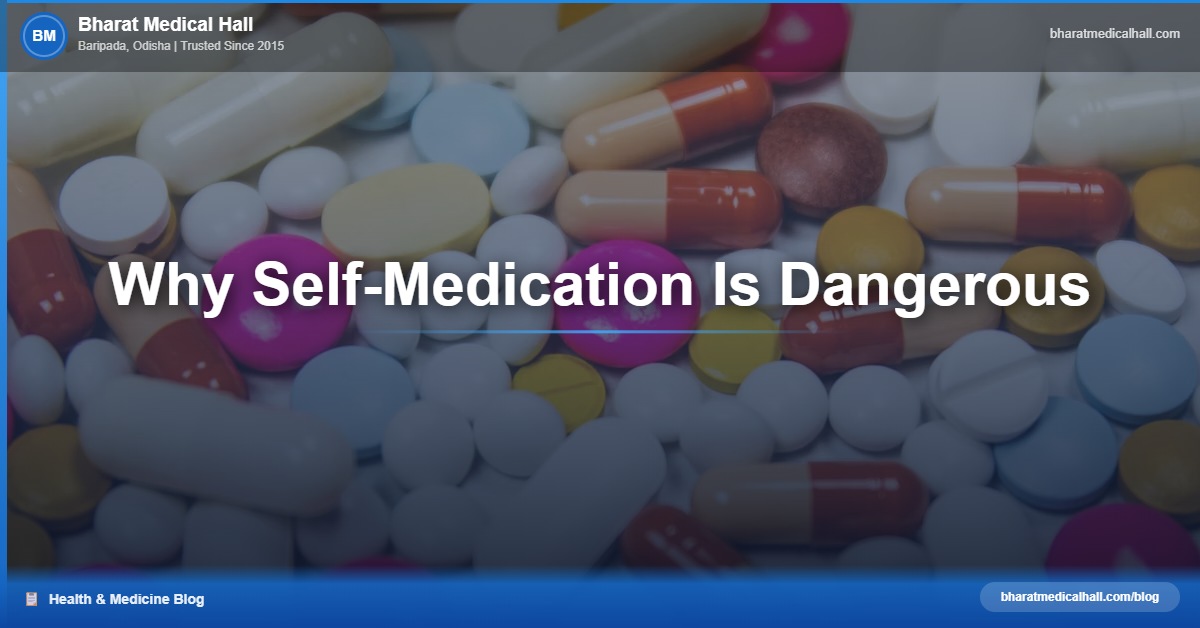
In India, self-medication is extremely common. People buy medicines for symptoms without consulting a doctor, taking leftover prescriptions, or following advice from family, friends, or online sources. While this may seem practical and cost-effective, self-medication is genuinely dangerous and responsible for significant morbidity and even deaths annually. This guide explains why.
What Is Self-Medication?
Self-medication includes taking medicines without a doctor’s prescription or advice, self-diagnosing and treating a condition based on symptoms, continuing or reusing old prescriptions without reassessment, taking medicines prescribed for someone else, relying solely on pharmacy staff, friends, or online sources for prescription medicine decisions.
Dangers of Self-Medication
1. Incorrect Self-Diagnosis
Self-diagnosis is often wrong. You may treat the wrong condition, missing the actual diagnosis. For example, treating abdominal pain as acidity when it is actually appendicitis. Treating chest pain with antacids when it is actually a cardiac event. Treating chronic cough as a common cold when it may be tuberculosis or lung cancer. Masking symptoms delays proper diagnosis and can allow conditions to progress to dangerous stages.
2. Wrong Medicine or Wrong Dose
Without professional assessment, you may choose the wrong medicine or take the wrong dose. Too much can cause toxicity (paracetamol overdose causing liver failure is a significant concern), too little may be ineffective. Learn about dose management and the dangers of wrong doses.
3. Missing Drug Interactions
Self-medication without knowing your complete medicine list risks dangerous drug interactions. You may not know that a medicine you want to add interacts dangerously with a medicine you are already taking. Read about medicine interactions and how to avoid them.
4. Contributing to Antibiotic Resistance
Purchasing antibiotics without prescription and taking them for presumed bacterial infections (which may actually be viral) is one of the biggest contributors to antibiotic resistance in India. This is a national and global public health crisis. Read about why antibiotics must be completed fully.
5. Hidden Conditions May Be Worsened
NSAIDs taken for pain may worsen kidney disease in someone unaware they have kidney problems. Blood pressure medicines taken without monitoring can cause dangerously low blood pressure. Antidiabetic medicines can cause severe hypoglycemia in someone whose blood sugar is already controlled. Learn about common medicines that affect kidneys.
6. Allergic Reactions
You may not know you have an allergy to a medicine until you take it. Self-medicating without professional oversight means no one is monitoring for allergic reactions. Anaphylaxis (severe allergic reaction) can be fatal if not treated promptly. Without medical supervision, anaphylaxis risk from self-prescribed medicines is managed less safely.
When Is It OK to Self-Medicate?
Safe self-medication is limited to over-the-counter medicines for clearly defined, mild, self-limiting conditions. Examples include taking paracetamol for mild fever, using an antacid for occasional heartburn after a heavy meal, applying antiseptic cream to a minor cut, or taking an ORS for mild diarrhea without fever. Read our guide on which medicines are safe to keep at home.
When Must You See a Doctor and Not Self-Medicate?
- Symptoms that are severe, worsening, or persistent
- Fever above 39°C lasting more than 3 days
- Chest pain, difficulty breathing, or fainting
- Suspected serious infection
- Any condition requiring prescription medicine
- Children’s illnesses beyond mild fever or cold
- Pregnancy
- Chronic conditions like diabetes, hypertension, or thyroid disease
At Bharat Medical Hall, Baripada, Odisha, our pharmacists are trained to advise on appropriate self-medication for minor conditions and refer to doctors for conditions requiring medical assessment. We prioritize your safety above all else. For urgent consultations, many online platforms now offer same-day doctor consultations.
Get Expert Medicine Guidance at Bharat Medical Hall
Need medicine advice? Our expert pharmacists at Bharat Medical Hall provide safe, professional guidance on your medicines. Order online with home delivery across India. Consult Bharat Medical Hall
Frequently Asked Questions: Why Self-Medication Is Dangerous
Yes, for clearly defined mild and self-limiting conditions, using OTC medicines is acceptable. Paracetamol for mild fever, antacids for occasional heartburn, and ORS for mild diarrhea are appropriate self-medication. However, if symptoms are severe, persistent, or unusual, always consult a doctor.
Self-medication is common in India due to limited doctor access in some areas, consultation costs, long waiting times, ease of purchasing medicines without prescription, and cultural tendencies. However, the risks often outweigh the convenience.
Yes. Taking antibiotics without proper diagnosis is a major driver of antibiotic resistance in India. You may take the wrong antibiotic, wrong dose, or incomplete course – all of which contribute to resistant bacteria developing.
Consider government hospitals (free or low-cost), teleconsultation apps (affordable or free), AYUSH health centers, and community health centers. Some conditions can be safely managed with OTC medicines under pharmacist guidance.
Pharmacists are trained healthcare professionals who can advise on OTC medicine use. Asking a pharmacist for guidance on minor conditions is a step above pure self-medication. For serious conditions, a doctor’s assessment is essential.
The most dangerous forms include self-prescribing antibiotics, taking medicines prescribed for another person, continuing old prescriptions without reassessment, ignoring dangerous symptoms with self-prescribed pain medicines, and combining medicines without checking for interactions.
Consult our expert pharmacists at Bharat Medical Hall for safe medicine guidance. We help you distinguish between what can be safely self-treated and what needs a doctor. Order medicines online with home delivery across India. Visit Bharat Medical Hall